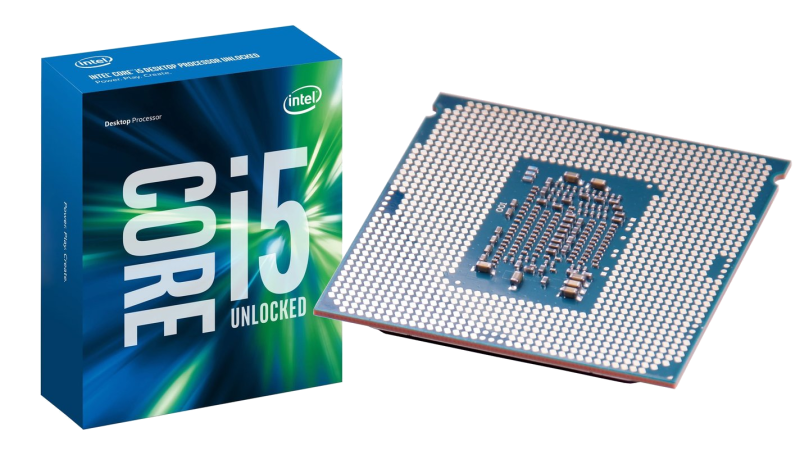
The Skylake i5 is the 6th generation Core micro-architecture that has a lot of gaming power by default, especially the K series of CPUs. But, with only 4 cores and no hyper-threading, they are just not the right fit for some scenarios, especially video encoding. So, other than buying a new CPU (and board and maybe even RAM – as intriguing as it sounds), what can you do to get more performance? Overclock it! That’s what the K stands for, right? OverKlocK.Read More »
Author: Robert Lohr
Software Developer, Technology Enthusiast, Sports Enthusiast, Metalhead
Netflix‘ Daredevil
My last blog post was about a Comic Book TV adaptation (Arrow) and this one is no different. I’ve been binge-watching Netflix’ own Daredevil with my sister and if you care to read on you’ll see how it managed to enthrall or appall me. Well, there’d be no binge-watching if it wasn’t worth it so that line was a waste of time. Anyway…
Arrow (Season 1 + 2)
I think it’s safe to say that I’m a sucker for superhero movies and comics. So it didn’t surprise me that I am totally digging the TV show Arrow. But unlike The Avengers or Iron Man or maybe others I haven’t seen yet, it is not just about super powers. Since it is a TV show and not a movie, the creators have much more time to tell a story with different arcs and develop the characters throughout. Going in I had no expectations whatsoever and now that I have finished Season 2, I am very pleasantly surprised about how much I have come to like it.Read More »
Ode to my bed (Verse Two)
The first verse is taken from here.
Verse One
Bed dear bed
how I loves thee.
In a cold winter’s night
thou keeps warm me.
I close my eyes, I go to sleep,
thou helps me dream
by counting sheep.
Bed dear bed
how I adore thee.
Every night I crave to be,
sung to sleep by lullabies from thee.
Verse Two
Bed, dear bed,
how I admire
the way you relax me
when I tire.
Every night
when I twist and turn.
Every hour
that I yearn
for a good night’s sleep
for some rest
I know you’re there
and do your best.
Bed dear bed
How I adore thee.
Every night I crave to be,
sung to sleep by lullabies from thee.
Tomb Raider 2013
Almost everybody knows Lara Croft, even those people that don’t really play games. At least they have heard that name before, probably through the movies with Angelina Jolie. In 2013 Square Enix rebooted the whole series and created a game that is so immersive beyond just the exploring of dungeons and ruins. It depicts how the Lara Croft of old, the tough archeologist, came to be. I know the old games, I played a few, but they never really hooked me. If it had not been for a promo code that came with an AMD video card I probably wouldn’t even own Tomb Raider.Read More »
Ergonomic Workplace / Gaming Mouse & Keyboard
Until a couple of months ago my main focus on buying input devices for computers was based on performance and price. I mean, in general that is how one goes about spending money, right? Check the spec sheet and see if it’s worth it. That’s how I always buy my things. I make up my mind that I need something and then I visit my preferred retailer websites and compare the prices. At my home desktop I am a bit more demanding than at work where I simply used (past tense) what came with the computer, but ergonomics never played a role. Boy has that changed.
Read More »
Intel Haswell-E Core i7-5820K vs. Ivy Bridge Core i5-5370
This one’s been bugging me for some time, mostly because I’m an enthusiast and even more so since I started transcoding my Blu-Rays to mp4. But I’ve never pulled the trigger. The reasons are simple:
- The GPU is not fast enough.
- It’ll only be good for this one thing, transcoding.
- I reasoned myself into not needing one.
- I am a penny-pincher.
Until recently…
Read More »
Dragon Age Origins: What an Awesome Game
The last time that I’ve written about a computer game dates quite a while back. I don’t know what took me so long, but I guess I was simply busy playing the games rather than writing about them. Dragon Age Origins, however, made me feel about a game like no other did before and I just have to tell you about this.Read More »
enable_shared_from_this: boost vs. std
If you are a modern C++ developer, then you are probably using some kind of smart pointer implementation. The boost C++ libraries offer one possible solution (among many other useful features) and are generally held in high regards in the C++ community. With the latest C++11 standard, some of those ideas found their way into the standard library bundled with your C++ compiler. At some point, you very likely run into a situation where you need a shared_ptr of one of your classes, but only have a raw pointer or this available.
This is where enable_shared_from_this comes in. Boost and the standard C++ library provide this feature and they both have a very important prerequisite for this to work.
Read More »
Windows 10: First Impressions (Preview Build 10041)
While I was grooming my unicorn on Crazy-Talk Island I read on the Internet about a thing called Windows 10. Curious as I am, I went out to watch the huge presentation on Jan, 21 where Microsoft officially unveiled the mobile version of Windows 10 and the cool hardware stuff. There’s also a very nice set of videos by Scott Hanselman on YouTube that show the changes from version to version.
Actually I’m very much aware of Windows 10 since the beginning, as a developer I’d be crazy not to, so I registered as a Windows Insider yesterday and downloaded the technical preview build 10041. Here’s a summary of my first impressions.
Read More »
Windows 8.1: One Year Later – I Get It Now
Windows 8 wasn’t all too well received, hardly a secret if you follow the tech press, neither by customers nor by businesses. There are a few folks who like it but they are, like those Windows Phone enthusiasts (that really do exist), a very minor minority (without report).
*Ahem*
About a year ago, I started using Windows 8.1 as my main operating system (which I’ve written about a few months later). Before, it was just a necessity to get the Soundblaster audio card to work. However, going through the same positional-sound problem again after upgrading from 8.0 to 8.1, I’m sure using Windows 8 fixed the problem by accident. Creative’s drivers are just a bulk load of crap, as they’ve always been. Had I not had the iMac as a work computer at that time, I’m not sure I would’ve installed Windows 8 instead of 7, but rather gotten rid of the Soundblaster Z. If you’ve read the post about the sound card, you know I was one of the many people that had an axe to grind with this OS.
Read More »
WorkTracker 1.3.0 Released
I added the second-biggest efficiency improvement since supporting the Enter key in the task input field. Also, this release is probably the last of the version 1 branch.
NVIDIA GTX 970 vs. AMD HD 7870 vs. NVIDIA GTX 560 Ti
My gaming PC is about two years old now (read this and this for more information) and although I didn’t really have any serious, permanent performance issues in games, I felt that it was about time to change something.
Here’s a short review and benchmark comparison of NVIDIA’s latest GTX 970 vs. the AMD Radeon HD 7870 (quite a mouthful) that I had installed before. The latter also had to show what it can do compared to an older NVIDIA GTX 560 Ti.
Read More »
The Pitfall of Trying to Be Too Smart When Using dllexport/dllimport
As a seasoned C++ developer I should’ve been aware of this which makes it a little bit embarrassing. But, since this issue has cost me several hours of searching through the Internet over the course of two or three days, I thought it might be worth sharing. Maybe somebody else is trying to be too smart or just doesn’t know better.
The problem? It is summarized in short in this StackOverflow question that I posted. With this blog post I’ll be a bit more elaborate and show some details.
Read More »
Grails Startup Error: ASSERTION FAILED at JPLISAgent.c
Grails always has something new to offer, not only features but also random bugs (unfortunately). Out of the blue I couldn’t even let Grails show its own version (grails –version) let alone perform any other action. This is all I got for each and every command I tried to execute.
*** java.lang.instrument ASSERTION FAILED ***: "!errorOutstanding" with
message transform method call failed at
../../../src/share/instrument/JPLISAgent.c line: 844
Exception: java.lang.StackOverflowError thrown from the
UncaughtExceptionHandler in thread "main"
The following runtimes were used:
- Windows 7 64bit
- Java 7 Update 71 64bit
- Grails 2.4.4
Of course I removed all temporary files and folders, the “target” folder of the project and the “.grails”, “.groovy”, “.m2” and “.ivy” folders in the user directory. Nothing helped. Some say it has to do with forking processes, but playing with those settings didn’t change a thing. After all, the error happens way earlier.
Then I came across a post that mentioned to create the “.inputrc” file (on a Linux system) because through debugging it was found that Grails tries to access this files. Well, I’m not using Linux, but since I was already in the “helplessly desperate” phase I wanted to give it a shot. Surprisingly, this file already existed.
Solution: I deleted “.inputrc” from the user folder et voilà, Grails worked again.

